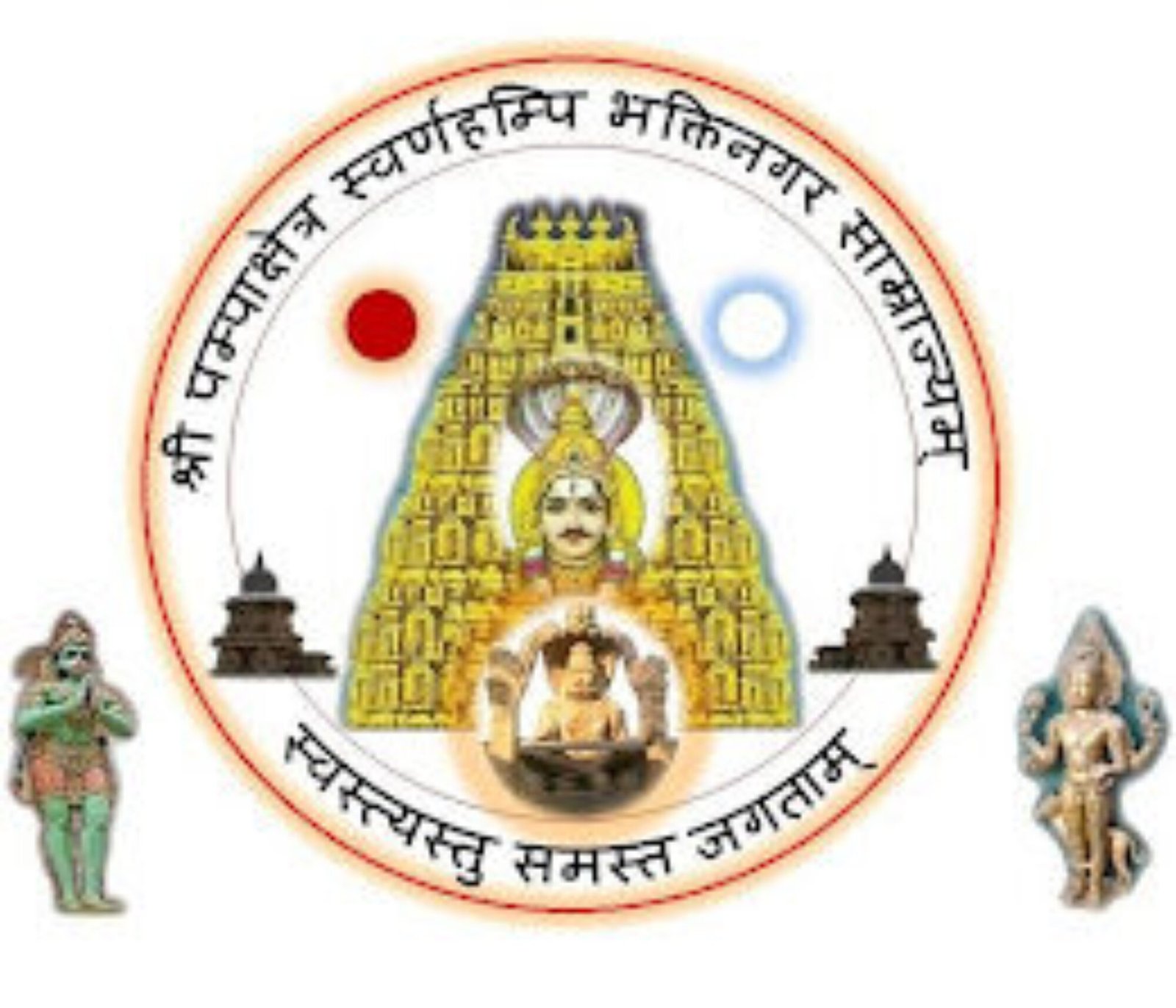




Pampa Kshetram – A Center for Vedic Knowledge, Wisdom, and Traditional Education
Nestled along the banks of the sacred River Pampa (Tungabhadra), Pampa Kshetram holds a venerable position in the spiritual and intellectual landscape of Bharat. Known since antiquity as a primordial seat of learning and enlightenment, this holy land—often referred to as Vidya Nagara (the City of Knowledge)—has served as a beacon for seekers, rishis, and scholars across eras (yugas).
From the legendary learning of Lord Hanuman in Treta Yuga to the categorization of the Vedas by Bhagavan Veda Vyasa, Pampa Kshetram stands as an enduring citadel of Sanatana Dharma.
The Birthplace of Vedic Classification: Bhagavan Veda Vyasa Ashram
Over 5,300 years ago, during the transition of epochs, Sage Bhagavan Veda Vyasa arrived at this sacred kshetra. Recognizing its serene atmosphere and spiritual vibration, he established the Bhagavan Veda Vyasa Ashram & Gurukul. The primary mission of this ashram was the protection, preservation, and propagation of Sanatana Dharma, Vedas ,Varna Ashrama through systematic education.
The Division of the Vedas
Before Veda Vyasa’s time, the eternal knowledge of the cosmos existed as a single, vast body of Vedic mantras. To ensure that this sacred wisdom remained accessible and digestible for future generations in Kali Yuga, Veda Vyasa undertook a monumental literary and spiritual task in Pampa Kshetram:
- He organized the singular Vedic stream into four distinct Vedas: Rigveda, Yajurveda, Samaveda, Atharvaveda, He entrusted these branches to his chief disciples and taught revered rishis and munis—such as Jabala—who studied at his gurukul, creating a continuous lineage (guru-shishya parampara) of Vedic preservation.
Treta Yuga Traditions: Lord Hanuman’s Mastery of Grammar
The sacred heritage of Pampa Kshetram extends back to Treta Yuga. According to tradition, this region—encompassing Kishkindha—was where Lord Hanuman pursued his higher education.
Hanuman learned the Nava Vyakarana (the nine schools of Sanskrit grammar) directly from the Sun God (Surya). By absorbing knowledge as Surya traversed the skies, Hanuman exemplified the highest ideals of devotion (bhakti) and intellectual excellence (jnana), cementing Pampa Kshetram’s reputation as a sanctuary for mastering complex traditional sciences.
Renaissance of Vedic Wisdom: Jagadguru Sri Vidyaranya Shankaracharya
Centuries later, during a period when Vedic traditions faced severe challenges, Pampa Kshetram once again stepped forward to revitalize Indian culture.
Jagadguru Sri Vidyaranya Shankaracharya, the 12th Jagadguru of the Sringeri Sharada Peetham, recognized the spiritual importance of this region. Under his guidance:
- The city of Vidya Nagara (later known as Vijayanagara) was established as a powerhouse of learning and governance.
- Sri Vidyaranya, alongside scholars like Sayana, authored comprehensive Bhashyas (exegeses and commentaries) on all four Vedas.
These commentaries provided foundational interpretations that preserved the deeper philosophical meanings of Vedic mantras for generations to come.
Core Pillars of Pampa Kshetram’s Scholarly Heritage
| Epoch / Era | Key Figure | Contribution to Learning |
| Treta Yuga | Lord Hanuman | Mastered the Nava Vyakarana (9 Grammars) under Surya. |
| Dvapara / Kali Transition | Bhagavan Veda Vyasa | Established Bhagavan Veda Vyasa Ashram ( Source : Pampamahatmyam ) the Gurukul; classified the single Veda into 4 Samhitas. |
| Classical Period | Rishi Jabala & Munis | Preserved the oral transmission (Guru-Shishya Parampara). |
| Medieval Renaissance | Sri Vidyaranya Shankaracharya | Authored Veda Bhashyas and established Vidya Nagara. |
Conclusion: An Enduring Legacy
Pampa Kshetram is not merely a historical location; it is a living symbol of India’s intellectual and spiritual heritage. As the site where the Vedas were codified, where divine beings learned grammar, and where foundational commentaries were penned, it remains a timeless center of wisdom, traditional education, and Sanatana Dharma.
The Golden Era of Vijayanagara: Kings, Ashta Diggajas, and Scholarly Debates
Carrying forward this profound legacy, the Vijayanagara Empire transformed Pampa Kshetram into the cultural and intellectual capital of the subcontinent. Under the patronage of emperors like Sri Krishnadevaraya, the royal court (Asthanam) flourished with legendary scholars:
- The Ashta Diggajas: Eight monumental poets and scholars adorned the court of Sri Krishnadevaraya, contributing masterpieces in Telugu, Sanskrit, and Kannada literature.
- Tenali Ramakrishna: Renowned universally for his exceptional wit, profound scholarship, and mastery of scriptures, Tenali Rama stands as a timeless symbol of the intellect nurtured in this region.
- Shastric and Kavita Debates: Pampa Kshetram became a vibrant hub where sages, kings, asthana vidwans, and visiting scholars from across Bharat gathered for rigorous philosophical, religious, spiritual, and poetic debates (shastrartha and kavita gosthis). Knowledge and debate were held in the highest esteem, surpassing mere political power.
The Tradition of Tulabharam
Scholars, poets, and spiritual masters who triumphed in these scholarly assemblies or contributed profoundly to wisdom were honored by the emperors through the sacred tradition of Tulabharam. In this ceremony, scholars were weighed against an equivalent amount of pure gold, which was then generously donated to them by the king as a token of supreme reverence for knowledge (Vidya).
Renaissance by Jagadguru Sri Vidyaranya
Guiding this intellectual renaissance, Jagadguru Sri Vidyaranya Shankaracharya helped establish Vidya Nagara and authored comprehensive Bhashyas on all four Vedas, ensuring the eternal flame of Vedic wisdom continued to burn brightly.
Jagadguru Sri Vidyaranya: The Architect of Wisdom and Arts
At the heart of Pampa Kshetram’s intellectual renaissance stands Jagadguru Sri Vidyaranya Shankaracharya. Beyond guiding the establishment of Vijayanagara and writing the comprehensive Bhashyas for all four Vedas, his pen shaped virtually every branch of classical Indian learning:
Pioneering Works on Carnatic Music: Demonstrating an astonishing breadth of mastery, Sri Vidyaranya also authored treatises on Karnataka Sangeeta (Carnatic Music), laying down theoretical foundations for the classical musical traditions that blossomed in the region.
Advaita Vedanta Masterpieces: He authored foundational philosophical texts, most notably the Panchadashi—a celebrated manual on Advaita Vedanta—alongside other profound treatises explaining the nature of consciousness and reality.
Sanskrit Grammar and Works: He contributed exceptional scholarly treatises on Sanskrit grammar and auxiliary Vedic sciences (Vedangas).
Leave a Reply